DIALOGUE

Lessons, responsibility & warnings

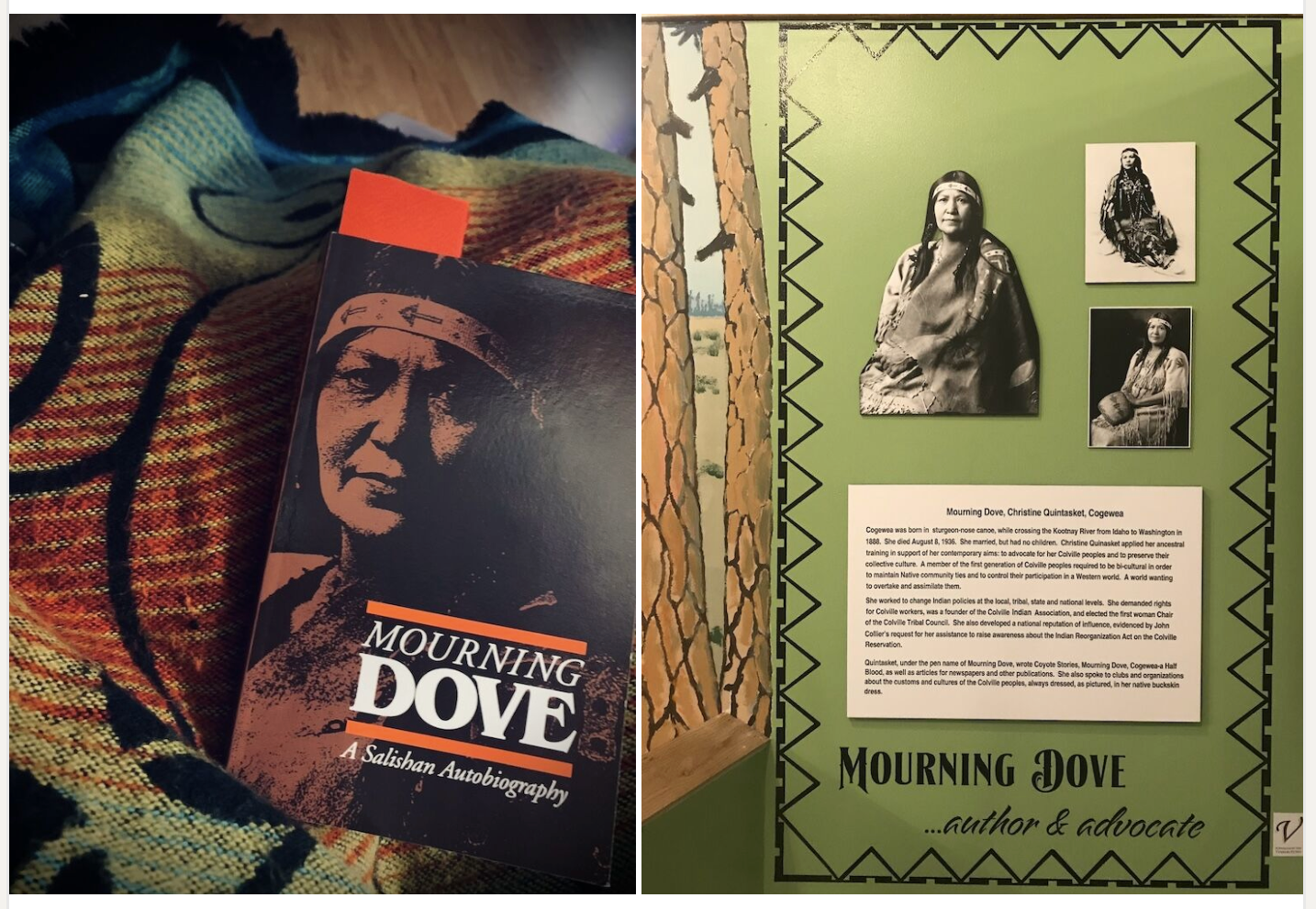
What was intended to be a monthly post has taken much longer this time to put together since life circumstances have been in rapid motion lately. A Sńʕaýckstx friend and mentor recommended an important work from her people titled Mourning Dove: A Salishan Autobiography, writings about the life and memories of Christine Quintasket, who lived from 1888-1936. Its stories of survival, leadership and cultural evolution within her territory in the early colonial era hold lessons, responsibility and warnings for our time. Mourning Dove observes and recounts the traditional ways of being they continued to uphold along with the newcomer practices they were acquiring as settler presence increased. At this cultural and historical confluence, she records egregious injustices and ongoing upheaval with a tone that is as pragmatic and determined as her childhood with hard-working parents taught her to be. Her adult life was also strenuous, but adventurousness and vision meant that she made time for her craft as a writer while also fulfilling responsibilities in her community. Sadly, she only lived to the age of 48, but left two published works, including the fictional novel Cogewea featuring a bold and independent female protagonist, and Coyote Stories as re-told from her childhood memories of community storytelling.

This autobiography was not published until 1990, assembled from various collections preserved after Mourning Dove’s death through relationships she had cultivated within the publishing industry. It is difficult to discern what her overall intention would have been, had she been the one to assemble the pages. The editor calls the collection an “impactful autoethnography,” extending from his own discipline of anthropology. While there is historical interest in the long introductory context he shares, I most enjoyed immersing myself in Mourning Dove’s world as she saw it. The moments and stories she selected each hold meaning and questions that will stay with me and invite future re-reading.

Other readers may find their own lessons, responsibility and warnings, Currently, what is staying with me is the preciousness of life and the responsibility we each carry to witness its stories and pass them on to those yet to come. The additional responsibility I carry is to keep witnessing and sharing the truth of history through the lens of my own ancestors’ complicity in colonial displacement and Indigenous erasure. The warning I am holding is that even if it seems like the world is changing drastically, this may only be the beginning. Christine Quintasket gave herself the storytelling name Mourning Dove, in celebration of the bird’s cultural role as the wife of salmon who welcomed their return up the rivers from the sea each year. She lived not knowing that her treasured salmon would soon be halted by the dams.
Healing hearts & homes

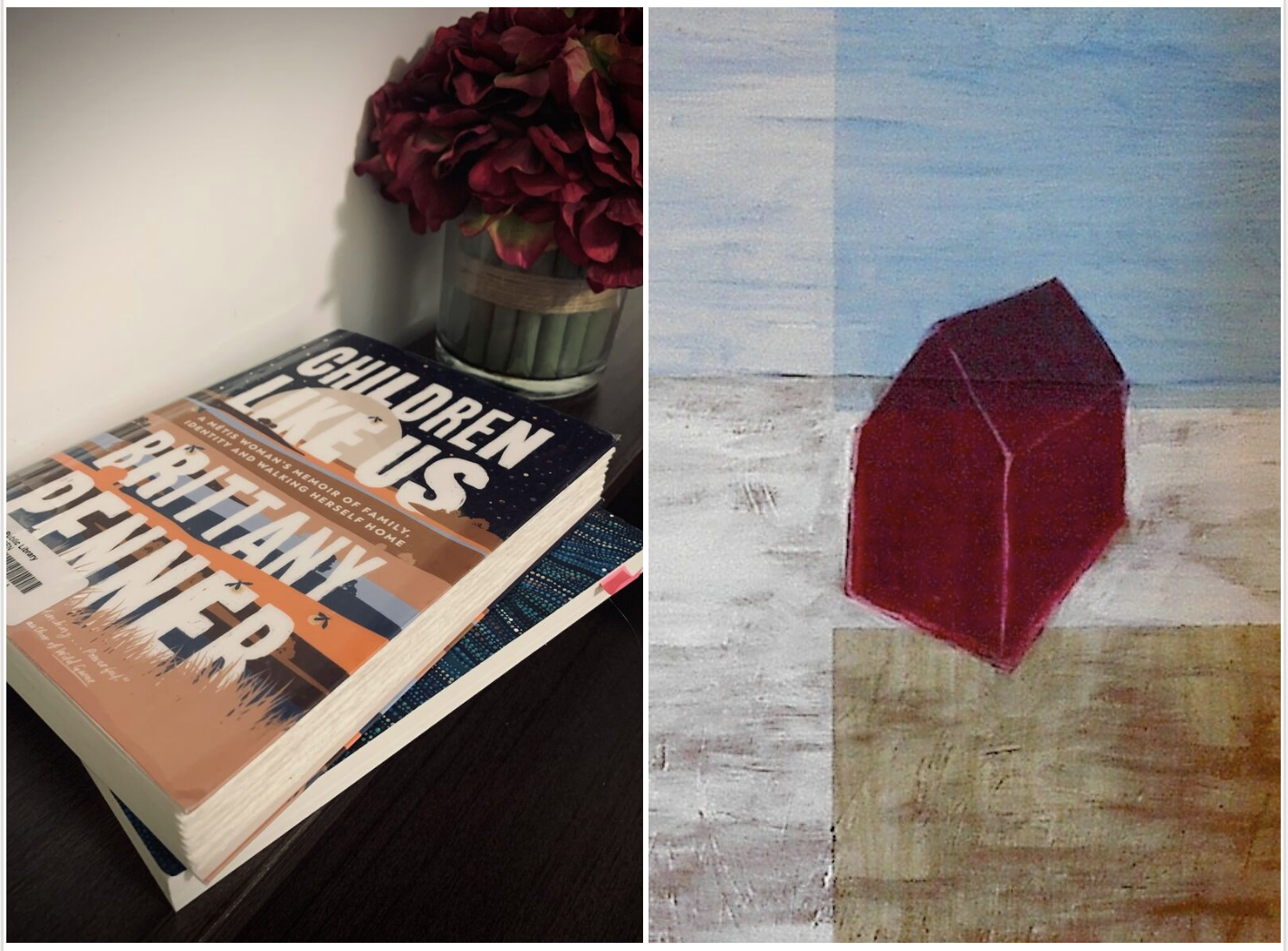
It is no small commitment to heal hearts and homes. The recent memoir Children Like Us by Brittany Penner (Métis) invites us to witness her brave and compelling personal story of healing through the confusions and loss of being adopted by a non-Indigenous family. Although her story is singular in its meaning and impact, it is plural in its representation of widespread suffering. As my friend and reading companion articulated, this is an important book for the awareness it brings to failings in Canadian society that do not receive enough attention. Through the writing, Brittany arrives at the understanding she then shares, that the Sixties Scoop continued well into the 1980’s when she was one of many who were still being taken. Many Indigenous children are still being taken.

As we accompany Brittany through connection and loss, community discrimination and glimpses of abuse, as well as her path toward healing, we also see through her eyes the many other ‘children like her’ surviving related experiences, since her extended family fostered more than a hundred children and she had 21 foster siblings before age seven. Her biography in the book cover shares her career success in becoming a medical doctor, so it is not a spoiler to highlight that academic achievement was an important component of her path of resilience. In fact, she has become a family physician in the town where she grew up, which she discusses in a community radio interview sharing about her early experiences as a published writer.

As a family doctor, Brittany Penner has, very generously, become a conduit of healing in the community where her childhood harms took place. Her book is just as generous. In a writerly conversation on the University of Manitoba radio show Turning Pages, she shares that she offers her story so that Indigenous readers who have had similar experiences may not feel so alone. She extends the hope that all readers may feel accompanied in their own struggles. Her recollections indeed resonate with necessary lessons for us all: self-compassion balanced with generosity of spirit relative to others’ imperfections. What are your commitments and methods in healing heart and home relative to colonial harm? What reading has supported you in this? We now have three books lined up in our queue, but the list for reading—and healing—is many lifetimes long.

Standing with leaders, books & pines

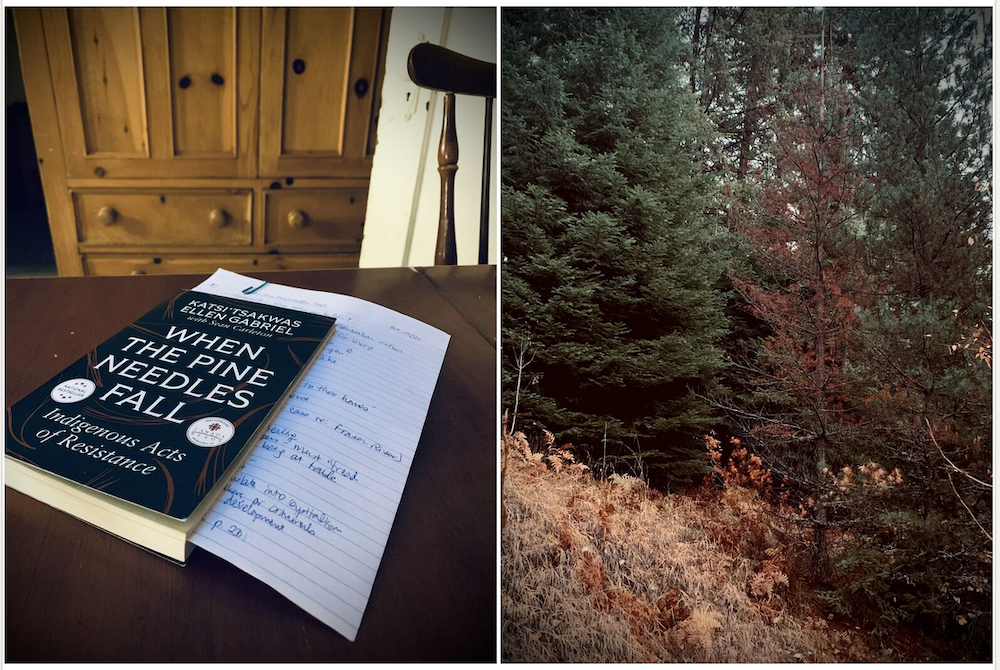
Each month I’m aiming to read and reflect upon a book by an Indigenous writer—a commitment I’ve made many times, in many ways. This month has been When the Pine Needles Fall: Indigenous Acts of Resistance by Katsi’tsakwas Ellen Gabriel with Sean Carleton. I read it with pine needles falling outside my window, as a tree that should still be young and healthy mysteriously loses vitality among others that are still green.

Katsi’tsakwas Ellen Gabriel, has been standing with strength “in the pines” as a Kanien’kehá:ka woman and leader for a long time. It was the 1990’s when her name and presence became widely known as she stepped up to be her community’s bilingual spokesperson during the Siege of Kanehsatà:ke and Kahnawà:ke. Many Canadians don’t know these events for their rightful name, so I must also add Oka Crisis as parenthesis.

Ellen speaks in personal terms of the many truths that have been suppressed since that era. She contextualizes those long months of trauma within the trajectory of colonial harm that started long before and continues to this day. Through a deeply human view, she exposes the dehumanizing depths Canada will go to for all manner of profit-making. Their conversation also exposes the jurisdictional disputes and power struggles on the colonial side that inhibited better outcomes, while drawing commonalities with international power networks and deplorable current events. Canada is not alone in tyranny against Indigenous rights and sovereignty, nor in prioritizing the performance of improved relations instead of authentic transformation.

While one can honour the strength, resilience and courage in her stories, it is equally valid to feel sad and angry. The book includes photos of Ellen from the era of the siege. She was a young woman when she first stepped up to the microphone as her Elders asked her to do. Now, at 66 years old, she is still involved and vocal and inspiring new generations of leaders. It is sad that many of the fights that show up in the news or are kept from it, are still the same as a lifetime ago.

What is hopeful in this book is that it’s been published at all, and Canadians like me are reading and being influenced by it. It is also hopeful as a conversation between friends. Ellen and Sean acknowledge commonalities with Rehearsals for Living by Robyn Maynard and Leanne Betasamosake Simpson, a book I also enjoyed as a conversation between friends, read with friends. I hope others will also read this book with a friend, and foster friendships where truths like these can be held together. For whatever curses may be seen to live in these particular “interesting times,” we are blessed by an abundance of Indigenous books as accessible opportunities for dialogue and growth. She isn’t on here but thank you to M.R. for reading and thinking with me.

What reading and witnessing will we pick up next? What do you recommend? I wonder what these pines need from me? What is needed to stand with leaders, books and pines?

Reconciliation? Justice & Choice

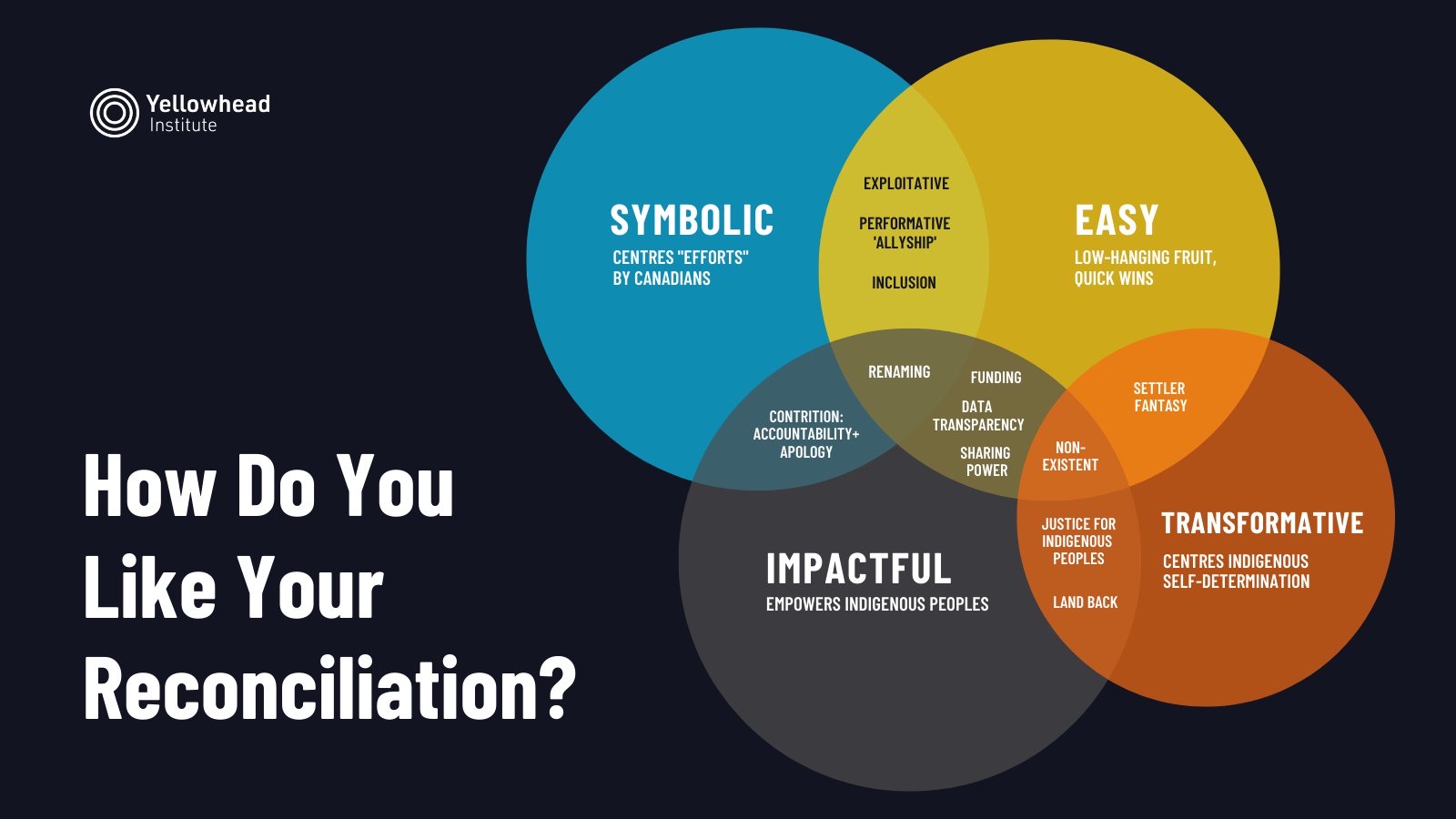
Today is the fourth National Day for Truth and Reconciliation, and the 12th Orange Shirt Day, and what has called my attention is the question posed by the Yellowhead Institute “How do you like your reconciliation?” It is posed as a Venn diagram, overlapping the dimensions of impactful, transformative, easy and symbolic. I am an idealist, and I most certainly want to contribute to reconciliation that is impactful and transformative, but it’s often difficult to see next steps and best impacts. In the diagram overlap between transformative and impactful, I am drawn to the aspiration “Justice for Indigenous Peoples.” What does Justice for Indigenous Peoples mean? Certainly the 94 TRC Calls to Action from 2015 give crucial guidance, and so do the 231 Calls for Justice from the 2019 Final Report of the National Inquiry into Missing and Murdered Indigenous Women and Girls. But these are just the most recent of many governmental processes and reports, which seem to often be assessed as a disappointment.

I learned recently of a BC-based justice initiative from the 1990’s whose final report has just been made public; a specialized police task force worked for more than a decade to pursue justice for residential school abuse, which did not take place to the same extent in any other jurisdiction. Although many of the survivors who took part “felt some disappointment in the relatively low number of convictions and short jail times,” there was also a sense that “this process gave those victims a choice.” Choice was, in itself, seen as a “crucial step toward reconciliation.”

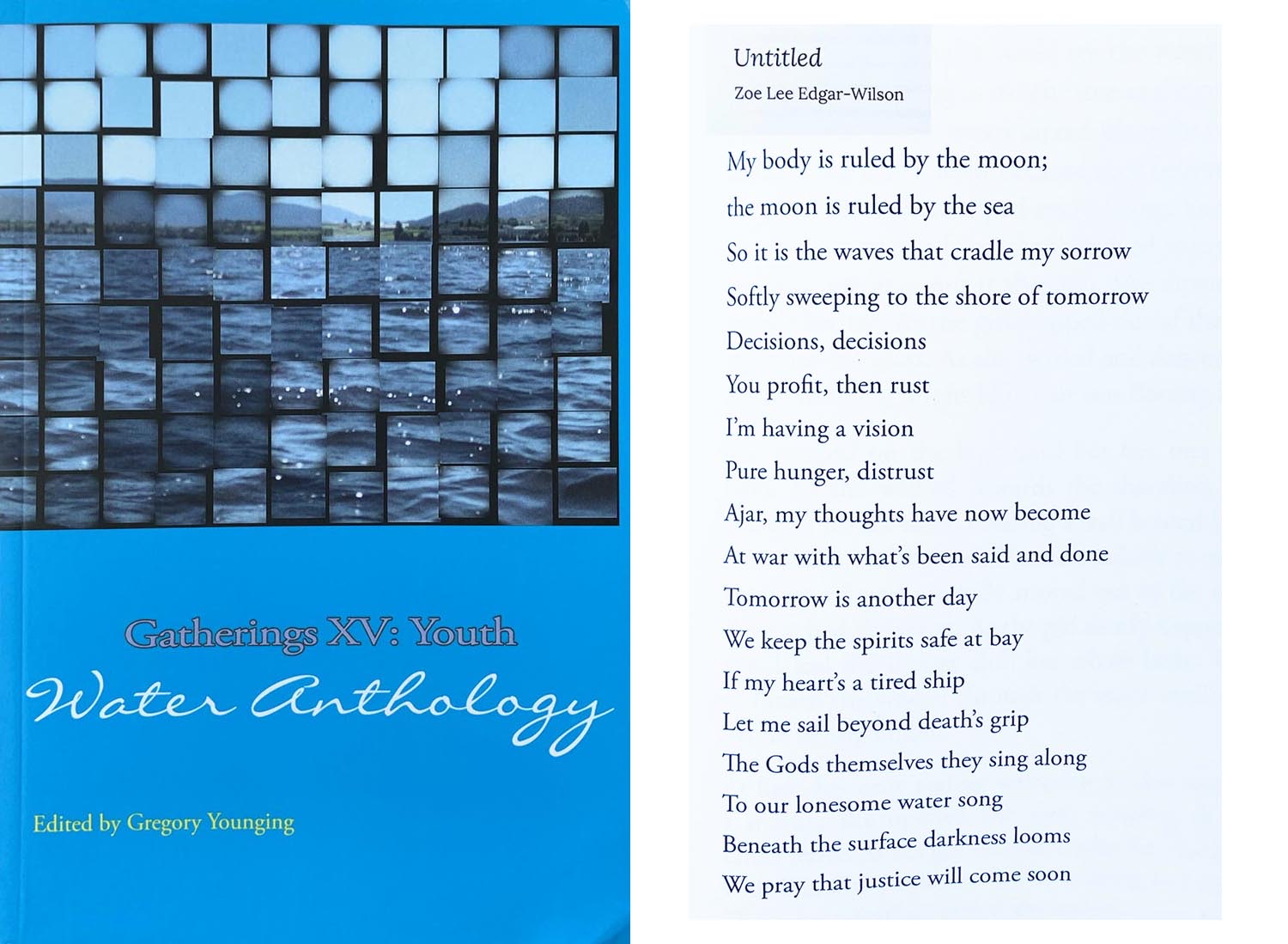
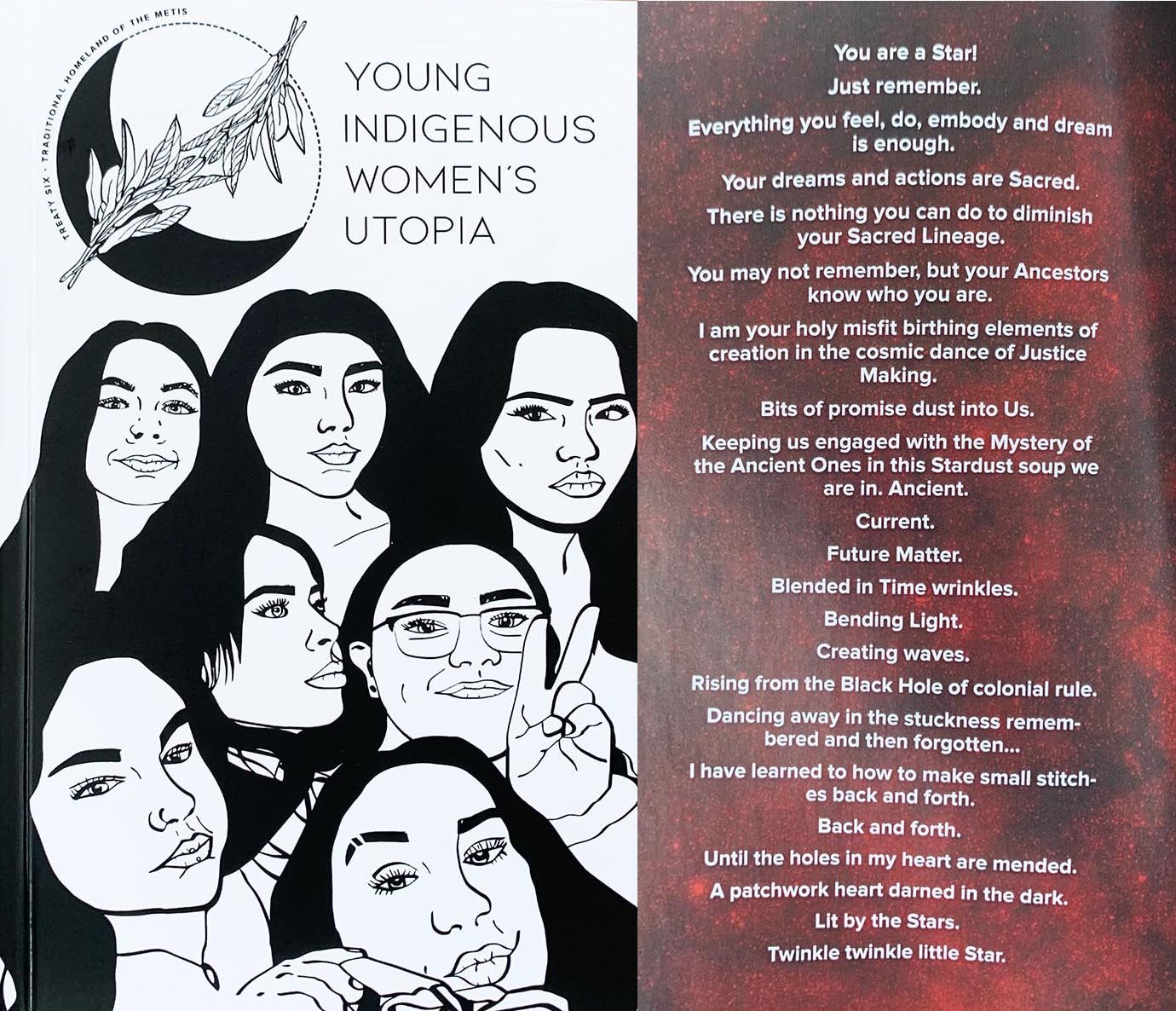
How can choice foster justice? What choices can I make today and every day that foster choice and therefore contribute to justice? As a teacher spending my time supporting youth, it is youth voices who help me to make sense of this kind of complexity. Below, two pieces of poetic guidance for justice from Indigenous youth writers (sources pictured, p. 185 and p. 84 respectively). They connect justice to land, water, ancestors, prayer and ultimately, healing and resurgence. I will carry their wisdom with me as I gather with others in my orange shirt, setting intention to make good choices in the year ahead.

Crisis, pace, and medicine stories

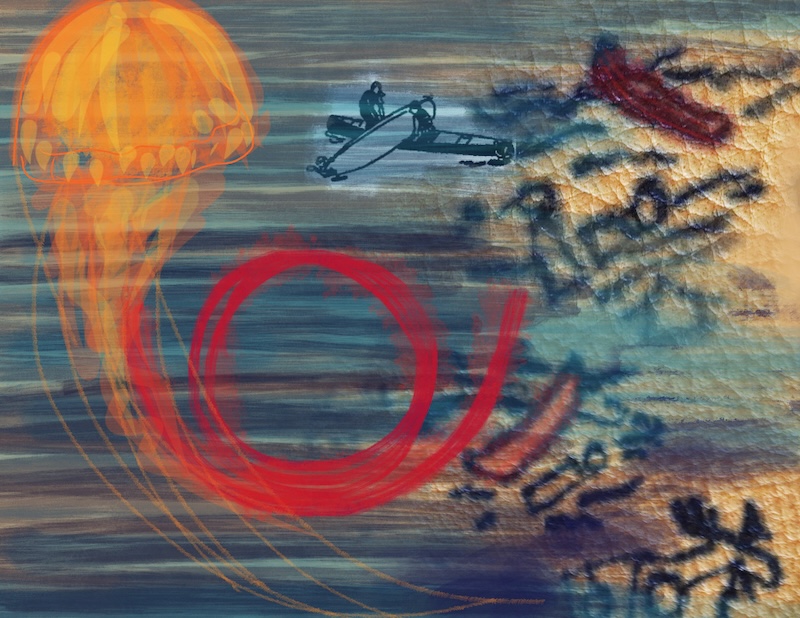
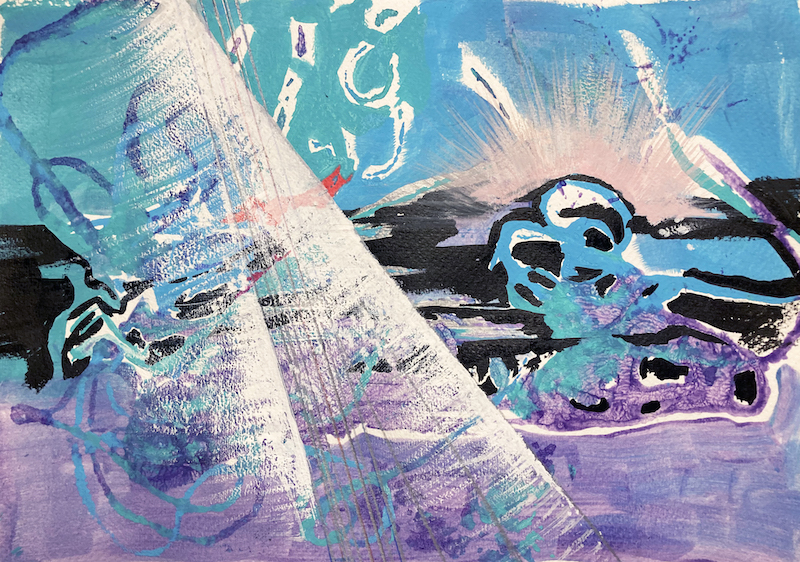
Our April circle opened with a short activity appreciating Tyson Yunkaporta’s Sand Talk teachings of symbol-making as a way to bring together our “dissimilar minds.” Interestingly, assembling themes together now after some time has passed, I’m discovering that Yunkaporta’s next book Right Story: Wrong Story opens and continues with canoe stories, an association that came up throughout our dialogue, and in the resulting art piece above. We also opened by being treated to captivating marine storytelling of one circle participant’s family surviving tense moments in pirate waters, which they did through dialogue, strategy and prioritization, then sober assessment once the threat had passed.

Alongside these dramatic narratives, we talked about skills and strengths developed in other emergencies or high-risk situations, and how seeking patterns and implementing systems is beneficial for quick problem-solving. This was a shift in approach from other conversations, since we generally find greater inspiration in more generative and dynamic processes, with the hope that grassroots problem-solving is gaining momentum counter to the mechanistic status quo. We spoke briefly of the Moosehide campaign as one such grassroots initiative, with its growing profile in our communities demonstrating a new commitment to women’s safety and Indigenous women, children and gender diverse people’s safety in particular. One person in the circle queried that although so many arising initiatives “feel good and right,” there is also a “struggle with time,” questioning if transformation is happening quickly enough. Perhaps crisis-oriented quick responses are indeed needed in such realms as climate action. When someone added that we should “travel at the speed of love,” we returned to the school system as we often do, reflecting that there is rarely enough time for the gentleness that many learners seem to really need in the times we are in. Our circle enacts taking the time for gentleness, which hopefully allows each of us to also find the time to do so for others in our various roles and spaces.

A memorable connection also came through learning about and appreciating jellyfish – from the crisis-connected symbolism to be found in their way of moving backwards to go forward, to their sensitivity and integration with the environment. Circling back to the Australia Aboriginal context we opened with, jellyfish teachings brought from this web page acknowledge the spiritual significance of jellyfish, evoking “adaptability, resilience, and transformation.” We are also reminded to heed boundaries, value cleansing and purifying, and preserve the ecosystem balance needed for this delicate species to thrive.

In addition to all this richness, there was a moment that brought great purpose to the work we are doing together. Noticing that sharing our stories with others allows them to carry the teachings to others, we also noted that we can give and receive support when someone needs their own stories returned to them as medicine in a time of crisis or confusion.

Travelling and staying

For this month’s circle, another co-planned session, our starting point was extending from a recent youth collaboration with the theme of movement and stillness. Broadening the scale, we thought of travelling and staying, also connecting to the many March holidays underway with school breaks, and sending out our best hopes for safe return. For the opening activity, we wrote a short post card to someone or to ourselves connected to memories of travelling or visiting that hadn’t gone as well as we’d hoped. We talked about things that can’t be re-framed, such as grief in losing close loved ones, as well as re-framing as a radical possibility for even the most entrenched thinking coming out in our times.

We also thought about travel from the perspective of digital or remote connections, as well as the importance of dream space, as one group member had been recently contemplating through the work of Toko-Pa Turner. In addition to dreams, and allowing time for intentional movement and stillness and even intentional boredom, we spoke about art-making and creativity as a space of dream travel. With a few powerful stories, we were called to contemplate faith, in examples of like-minded people finding one another across the globe against all odds, and healing journeys that may be long, but mysteriously guide you to the the right place when you are ready.

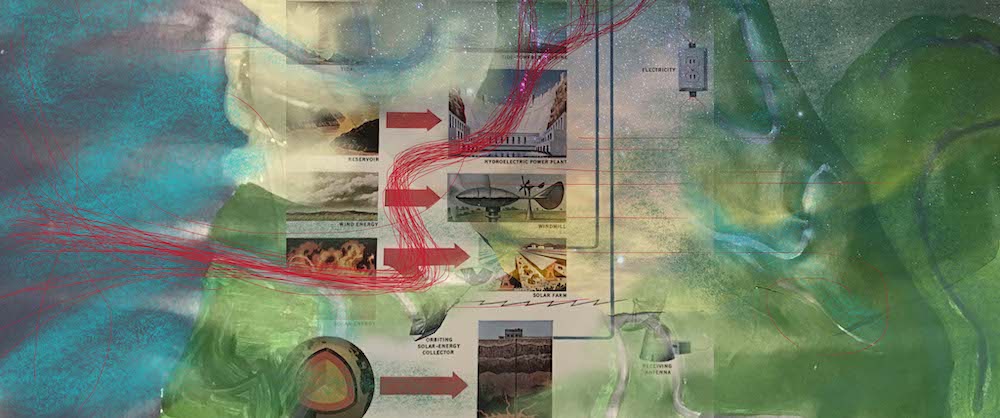
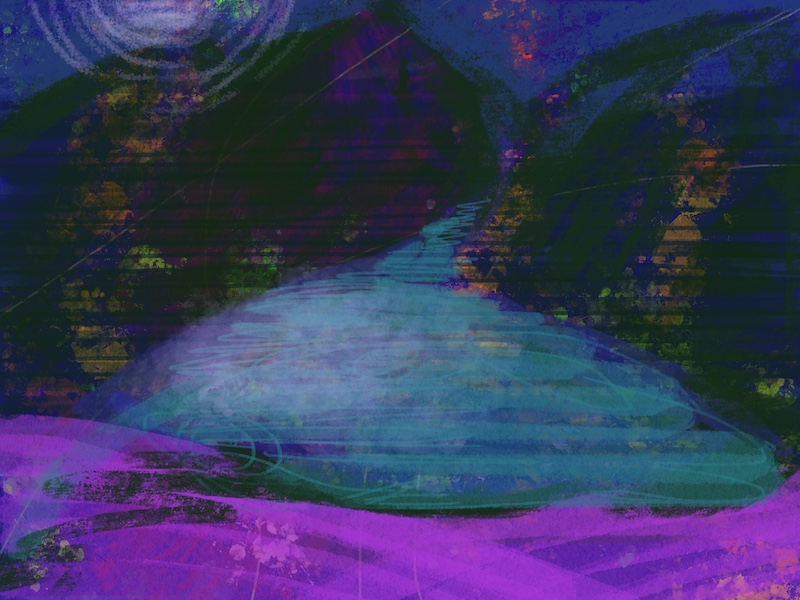
Considering the ethics of travel, we talked about times we have chosen not to travel because it uses fossil fuels, and others when we regretted not taking part in something that was very meaningful to loved ones. Concluding that everything is conflicted, and activism can easily be pushed to burnout, re-framing can sometimes serve our well-being, and others can detract from making clear decisions aligned with our intuition. Although it didn’t really form part of our conversation, the art at the top of the post includes honouring salmon’s travels across thousands of miles when they are unimpeded, which reminds us that making journeys home is natural, and we have a role to play in stewardship so that natural travel across lands and waters can be restored. Our own travels can also be one more way to see ourselves in connection with the seasons and cycles of our lives and the Earth.

Coyote encounters

To tune into the time set aside for Trickster and Coyote-themed conversation, a few of us began the hour with a brief inversion, recognizing that gravity feels very strong from the upside-down view. Others thought about order and chaos in their spaces, seeing that bringing order is a way of building a sense of calm and belonging. Recognizing that there is a lot of painful chaos happening in the world, we made the choice to not dwell there this time, instead seeking instances of what we thought of as “productive chaos,” and noticing that there are also occasions in which we can offer a place of order when someone is experiencing painful chaos.

There were many pre-planned and additional dimensions of Trickster and Coyote that emerged, leaving the impression that like many of our decolonizing topics, it’s just a cursory view to great depth of possibility. Since our conversations have often returned to stories and teachings of care-giving relatives it was a welcome difference to think about those in our lives who bring playfulness and optimism, irreverently shifting things when we are taking ourselves too seriously. One person shared that the humility that accompanies laughter is a welcome shift. Taking a moment to be imperfect is good; it’s okay to not have it all together. Another had received teachings at the school that day from someone of Splatsin First Nation: with so much in life you can “either laugh or cry,” so we should try to laugh. Coyote or Trickster’s laughter is indeed valuable to shift the mood or adjust focus in a conflict. Meaningfully, one person shared that “the part of me that’s playful is the part that makes life worth living.” For all these reasons and more, we can’t neglect Trickster’s view of things.

Another Coyote interpretation came when we spoke about the view that he is sometimes seen as lazy and selfish, asking whether there was a strength-based view to understand inaction within. The idea of laziness as a state of rest that “softens the edges,” was offered as a remedy to the instinct to harden when we encounter difficulties. In a hilarious extension of the ides of softening, we contrasted the idea of being a leader that is more like a sieve than a sponge, meaning that important things are kept as the emotionalism is released, rather than internalizing everything everyone gives you. And yet, we should remain curious, and be open to the playful curiosity that the more Trickster-tuned among us bring, since the creative or irreverent flipping of expectations and social norms can open that which is closed.

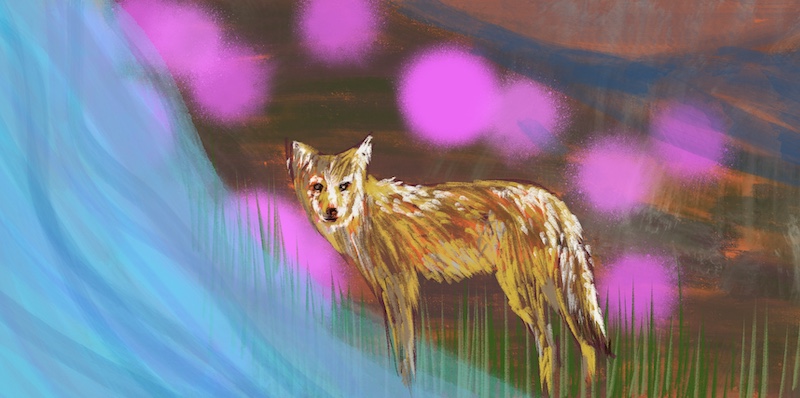
We ended our conversation also appreciating the model Coyote the animal provides in how resilient he is; omnivorous and adaptable, sustaining himself with anything from fruit to meat, and moving freely between natural and urban environments. For those among our group, or others who might want to go to greater depth with Coyote as a spiritual presence, a few resources that have helped bring some perspective are this tribute from Secwepemc culture, as well a global mythology perspective articulated on the Emerald podcast. As a partner to the Decolonization is not a Metaphor article we looked at recently, the inspiring writing offered by Cutcha Risling Baldy called Coyote is not a metaphor: On decolonizing, (re)claiming and (re)naming “Coyote,” as well as recent work by one of my mentors, Aubrey Hanson, titled Writing as Resurgent Presencing: An Urban Coyote Curriculum. Lastly, for the art-interested among us, the amazing Coyote-driven work by artist Julia Buffalohead will certainly bring inspiration. A particular piece, titled White Savior Complex was served up by one of my social media feeds, which pointed me, playfully, in important reflection directions.   

North, winter, dark, relative to what

For a few minutes I thought I had accidentally recycled my notes from our North-themed January meeting. It felt meaningful to lose the North, like losing my way, like losing winter. At times it has felt like winter never really arrived, I am indeed disoriented as snow disappears in rainstorms that go high up the mountain, when we’d normally be receiving mounds of the white stuff. But all is relative, and that was a major theme of our conversation. Our imaginations of the North are each influenced by the experiences we’ve had as individuals, but expanded by each others stories.

We honoured glimpses of Northern history and experience provided by Sheila Watt-Cloutier’s Right to be Cold, grieving how quickly traditional ways were overtaken, with colonialism forcing such vast change within one lifetime. One person shared about Tanya Tagaq’s Split Tooth, and the learning it brought regarding deep reverence for aspects of life we so easily take for granted. We celebrated the memory of witnessing PIQSIQ perform in Nelson, imagining how the art form developed with joy and connection, supported by the land and the intimate family lifestyle it fosters in the dark and cold.

Even as we thought about the darkness, we were reminded of balance with the light, as it seemed like a good thing to do to have a storytime interlude with the The Origin of Day and Night, a beautifully designed children’s book by Paula Ikuutaq Rumbolt, illustrated by Lenny Lishchenko. On the topic of balance, one participant shared a story from being present while The Snotty Nosed Rez Kids taught high school students that although music helped them get through hard times and figure out who they are, but emphasized that their “best creations have come through joy.” So we leaned into joy, and we dwelt in laughter, and there was plenty.

Thank you to Anna for another beautiful artistic memory and artifact to add visual presence to this post. Thank you to everyone for all the gems of wisdom as always. I’m recording here, because it might not be recorded anywhere else, that one of the magical properties of ice is that it allows us to “smell back in time,” since it captures some of the air that was with it as it froze. I love the wide-wandering delights of our unpredictable conversations!

Stringing together the scattered

In gratitude for another beautiful conversation with thoughtful people sharing generous life teachings, this post leaves a small trace for us to follow to the next time we will connect. Although the starting point was to welcome scattered people, ideas and focus as we were each reflecting on big years coming to an end and new ones beginning, it was the group priority to spend more attention toward stringing together strength. We received beautiful stories of women teaching next generations to knit, and an elder relative who was skilled in the fine hand work of repairing silk stockings. Priorities such as staying open for change, regulating our nervous systems, and connecting with the living world were shared as responses to our times where many people clearly aren’t coping.

Considering the emergent and profound question that arose from the group “can we be settled in an unsettled world, to do unsettling work?” there were opposing viewpoints that found equal and instructive expression. Where one person spoke from personal experience of feeling optimistic that a more expansive and less exploitative reality is unfolding, another voiced that a transformed worldview may not be the ultimate result of decolonization since there appears to be no movement toward policy changes that will benefit the next seven generations. As we closed in discussion about hopes and fears that come up imagining the “social idea of everyone having enough to be, without being controlled,” we agreed that artists will play a big role in that transformation.

The only reading recommendation made was the important article “Decolonization is not a metaphor” by Tuck & Yang, 2012, which some of the group had not heard of. It will likely come up again in future conversations.

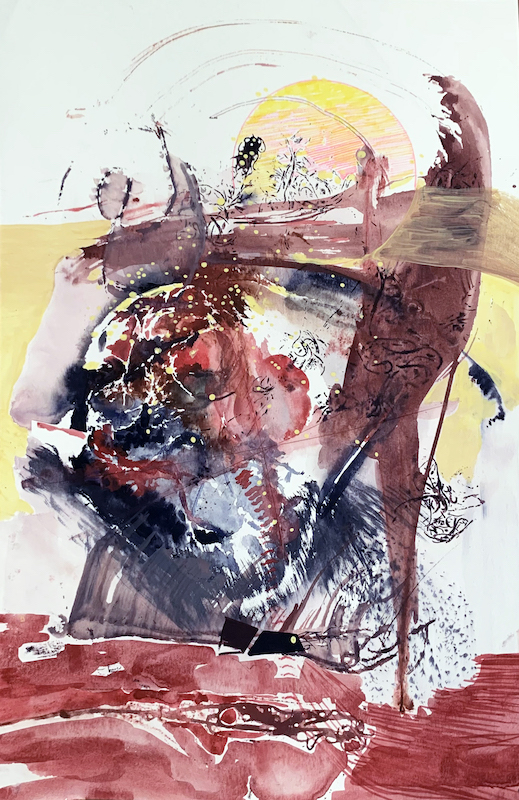
The collaborative art piece pictured above was made among our group soon after the meeting. It shares its own strength-driven presence with wings, muscles, and connective tissue emerge from fluid warmth, which is further warmed by a persistent winter sun. The scattering that is present feels like the joyful dispersal of small seeds of potential, spreading hope and kindness in reciprocity. There is an impression of depth, as in roots and connection, which is the ground from which propulsive momentum is emerging. What better way to begin a new year — together, connected, creative.

Like believing in magic

Our conversation was quieter than many gatherings, but was still as wide-ranging as ever. As we extended from the starting point of a mid-point reflection in our June to June commitment to gather, I began by sharing that I had come across the term heterarchical mentorship as an apt description of what we are doing. Others appreciated our circle as a space to be with whatever is coming up, a place for story, to listen and be heard, share emotions, ask important questions and heal ruptures. For future ideas, we explored co-planning possibilities, the hope for sharing book recommendations, and seeing our group as a space to convene listeners for “confounding issues” coming up in decolonizing practice.

We also revisited definitions of decolonization, since it is such an abstract and academic term which benefits from interfacing with experiential reality. My favourite definition that emerged was “decolonization is allowing the connection between everything to exist… it’s like believing in magic.” This brought a podcast recommendation for On Being with Krista Tippett speaking with James Bridle about the intelligence of the more-than-human world, and such innovations as “queering the internet through non-binary code.” We also spoke about our love for Tyson Yunkaporta’s book Sand Talk, which brings infinite angles and adventures regarding decolonization.

We also book-ended our conversation with reminders that time in nature is always healthy, and helps us to hold love, grief and responsibility relative to protecting the land and water. We aired frustration about oil and gas lobbyists having a very prominent presence at the COP summit underway at the time. Grief came up about the ongoing tragedy of Site C going ahead despite all opposition, and we received the sobering reminder to protect the water here that is still “wild and loud,” since “all the water in Europe is restrained.” We also held and valued the memory of community coming together with determination over years to protect Cottonwood Lake park and recreation area. When collective action brings success as in that case, it also feels like magic to believe in.