Standing with leaders, books & pines
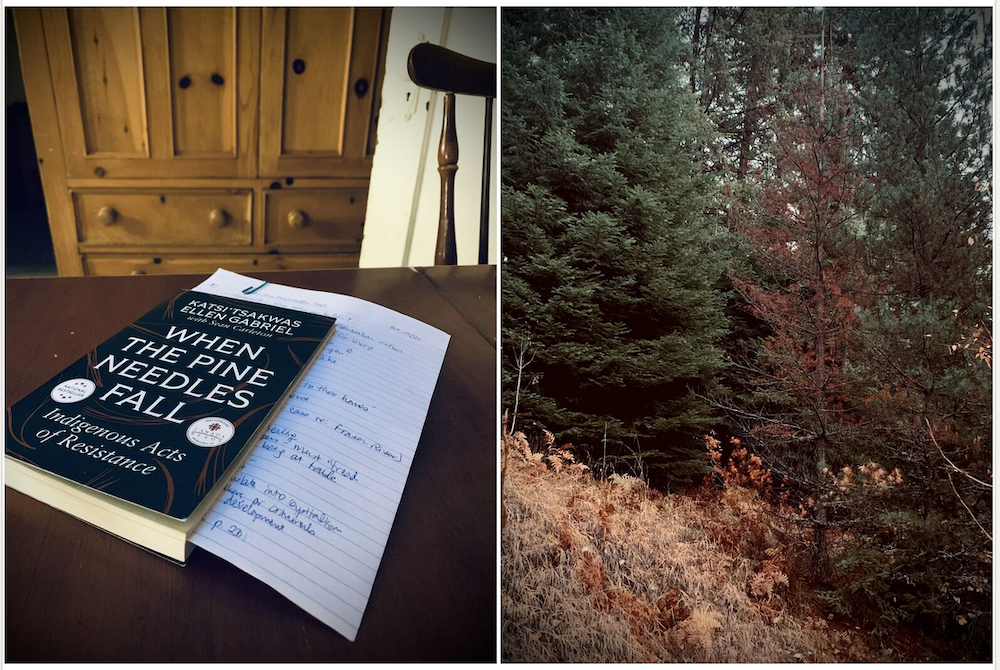
Each month I’m aiming to read and reflect upon a book by an Indigenous writer—a commitment I’ve made many times, in many ways. This month has been When the Pine Needles Fall: Indigenous Acts of Resistance by Katsi’tsakwas Ellen Gabriel with Sean Carleton. I read it with pine needles falling outside my window, as a tree that should still be young and healthy mysteriously loses vitality among others that are still green.
Katsi’tsakwas Ellen Gabriel, has been standing with strength “in the pines” as a Kanien’kehá:ka woman and leader for a long time. It was the 1990’s when her name and presence became widely known as she stepped up to be her community’s bilingual spokesperson during the Siege of Kanehsatà:ke and Kahnawà:ke. Many Canadians don’t know these events for their rightful name, so I must also add Oka Crisis as parenthesis.
Ellen speaks in personal terms of the many truths that have been suppressed since that era. She contextualizes those long months of trauma within the trajectory of colonial harm that started long before and continues to this day. Through a deeply human view, she exposes the dehumanizing depths Canada will go to for all manner of profit-making. Their conversation also exposes the jurisdictional disputes and power struggles on the colonial side that inhibited better outcomes, while drawing commonalities with international power networks and deplorable current events. Canada is not alone in tyranny against Indigenous rights and sovereignty, nor in prioritizing the performance of improved relations instead of authentic transformation.
While one can honour the strength, resilience and courage in her stories, it is equally valid to feel sad and angry. The book includes photos of Ellen from the era of the siege. She was a young woman when she first stepped up to the microphone as her Elders asked her to do. Now, at 66 years old, she is still involved and vocal and inspiring new generations of leaders. It is sad that many of the fights that show up in the news or are kept from it, are still the same as a lifetime ago.
What is hopeful in this book is that it’s been published at all, and Canadians like me are reading and being influenced by it. It is also hopeful as a conversation between friends. Ellen and Sean acknowledge commonalities with Rehearsals for Living by Robyn Maynard and Leanne Betasamosake Simpson, a book I also enjoyed as a conversation between friends, read with friends. I hope others will also read this book with a friend, and foster friendships where truths like these can be held together. For whatever curses may be seen to live in these particular “interesting times,” we are blessed by an abundance of Indigenous books as accessible opportunities for dialogue and growth. She isn’t on here but thank you to M.R. for reading and thinking with me.
What reading and witnessing will we pick up next? What do you recommend? I wonder what these pines need from me? What is needed to stand with leaders, books and pines?
Recent Comments